10 Water Safety Rules for Preschoolers (and How to Practice Each One)
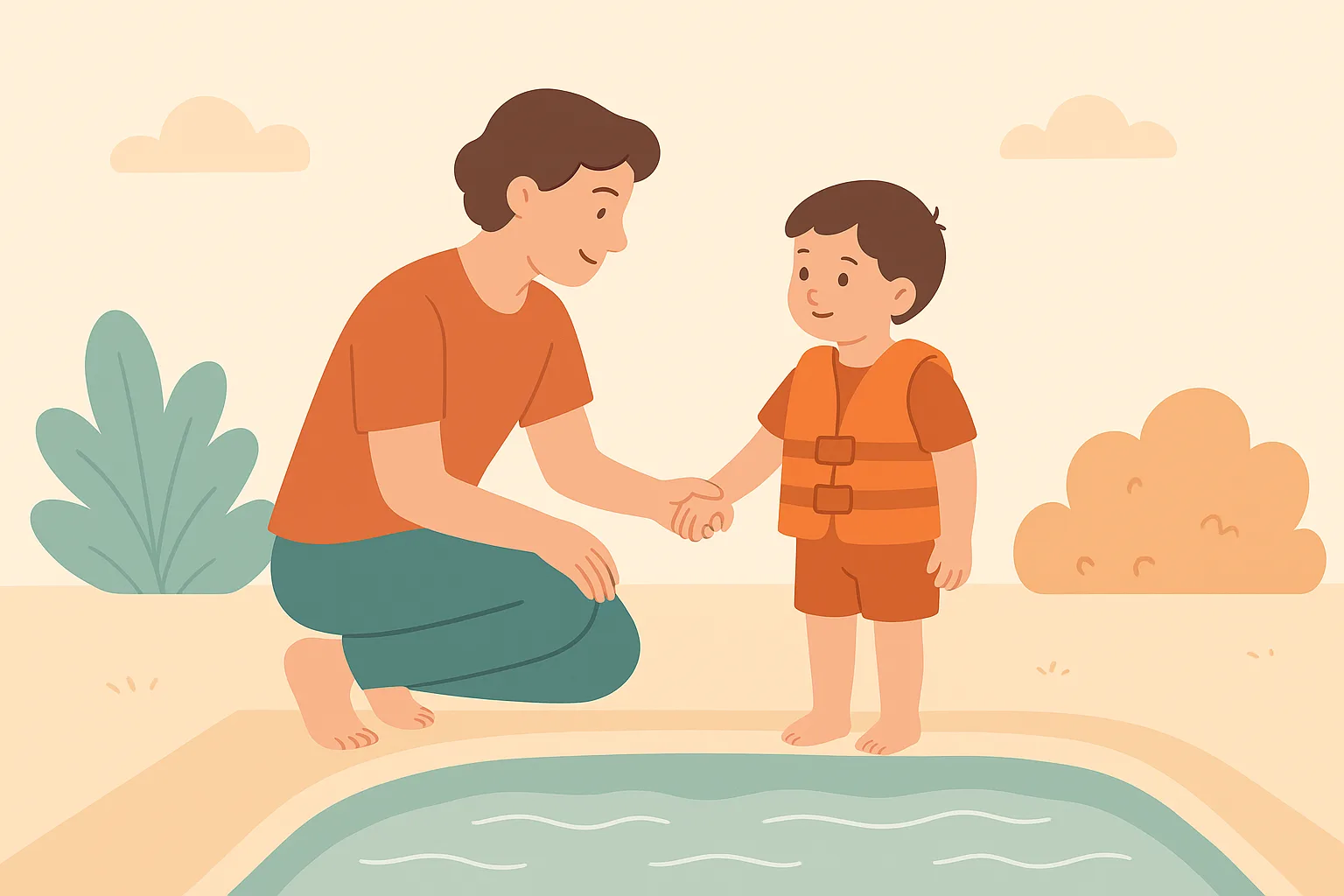
A child of 3 to 5 can drown in a few inches of water, quietly, in the time it takes to answer the door. That is the whole reason water rules for this age are different from rules for older kids. They aren't about swimming. They're about never being near water without you, and about what to do when a toy floats away.
These ten rules come from Chapter 4 of the PreSafe workbook. Each one has a way to practice it, because at this age a rule your child hasn't acted out is a rule they don't have.
1. Never go near water alone
The first rule and the only one that matters if you only teach one. The rhyme is "Water, water, stay away. Never go alone and play." Say it at the pool gate, at the bath, at the edge of the pond at the park.
Practice: stand at the gate or the tub and ask "Can you go in?" The answer is always "not without a grown-up." Reward the right answer every time.
2. Ask before you get in
Even with you there, the water is off limits until they hear yes. This gives you the second it takes to actually be watching.
Practice: make it a habit at bath time. They ask, you say yes, they get in. Same words every time.
3. Wear the life jacket on any boat, dock or open water
Float the Life Jacket is the character for this chapter. "A life jacket that makes me float is my best friend on a boat." Not a pool noodle, not arm floats. A life jacket that fits.
Practice: the fit check. Buckle it, then lift at the shoulders. If it rides up past the chin, it's too big.
4. Never reach for a toy in the water
This is how a lot of falls happen: the ball drifts, the child leans, and they're in. The workbook spends three pages on it because it's the rule kids break most.
Practice: float a toy just out of reach in the bath or a bucket. Ask what to do. "Get a grown-up" is the only right answer.
5. Walk, don't run, near the pool
Wet concrete plus a running 4 year old ends one way.
Practice: walk the pool deck together saying "walking feet." Say it every single visit.
6. Stay in the shallow part, where you can stand
A child who can touch the bottom can recover from a stumble. One who can't, can't.
Practice: show them the line or the step that marks their side. "This is your part of the pool."
7. Feet first, always
No head-first jumping at this age, into anything.
Practice: on the pool step, they jump to you feet first. Catch them. Repeat until it's the only way they know.
8. The bathtub is water too
Most of these rules feel like pool rules. They're also tub rules. Never alone, ask first, don't reach for the toy that slid to the far end.
Practice: say the rhyme at bath time, not just at the pool.
9. Stay away from the edge of ponds, lakes and ditches
Open water has no gate. The rule is a distance: as far back as you say.
Practice: at the park, pick a landmark ("stay behind the bench") and hold to it.
10. If someone falls in, get a grown-up and reach or throw, never jump
A 4 year old cannot pull anyone out. They can shout, and they can hand over a towel or a pole.
Practice: the workbook has a page where the child circles six things that could help someone in the water, like a rope, a noodle and a towel. Do it with real objects on the pool deck.
One tip: put the rhyme on the pool gate, the bathroom mirror and the car door. Three places your child sees before they see water.
What to do next
Chapter 4 of the PreSafe workbook has the Float pages, the never-reach stories and the "who can help" scenes to print and color. The water rhyme and the short chapter video are free in the Learning Center.
Questions parents ask
- At what age should a child learn water safety rules?
- As soon as they're near water, which is age 2 or 3 for most families. The rules above are for ages 3 to 5. Swimming lessons help, but the rules come first.
- Are arm floats enough?
- No. They slip, they deflate, and they let a child float face-down. For any open water or boat, a properly fitted life jacket. For pools, you within arm's reach.
- What's the most important rule?
- Never near water alone. If your child knows one thing, that's the one.
Explore the PreSafe Early-Age Safety Workbook
7 essential safety chapters, fun activities, catchy rhymes, and lifetime access to all video lessons. Everything you need to keep your little one safe.
You Might Also Enjoy
How to Get a 3 Year Old to Wear a Bike Helmet (and Keep It On)
Most helmet fights with a 3 to 5 year old are about fit, timing or the fact that nobody else is wearing one. Fix those three and the helmet stops being a fight. Here is how, plus the rhyme that helps.
A Room-by-Room Home Hazard Hunt for Kids Ages 3 to 5
A hazard hunt is a walk through your own house where your child does the finding. Here is what to look for in each room, and the questions that get a 3 to 5 year old thinking instead of just nodding.