How to Get a 3 Year Old to Wear a Bike Helmet (and Keep It On)
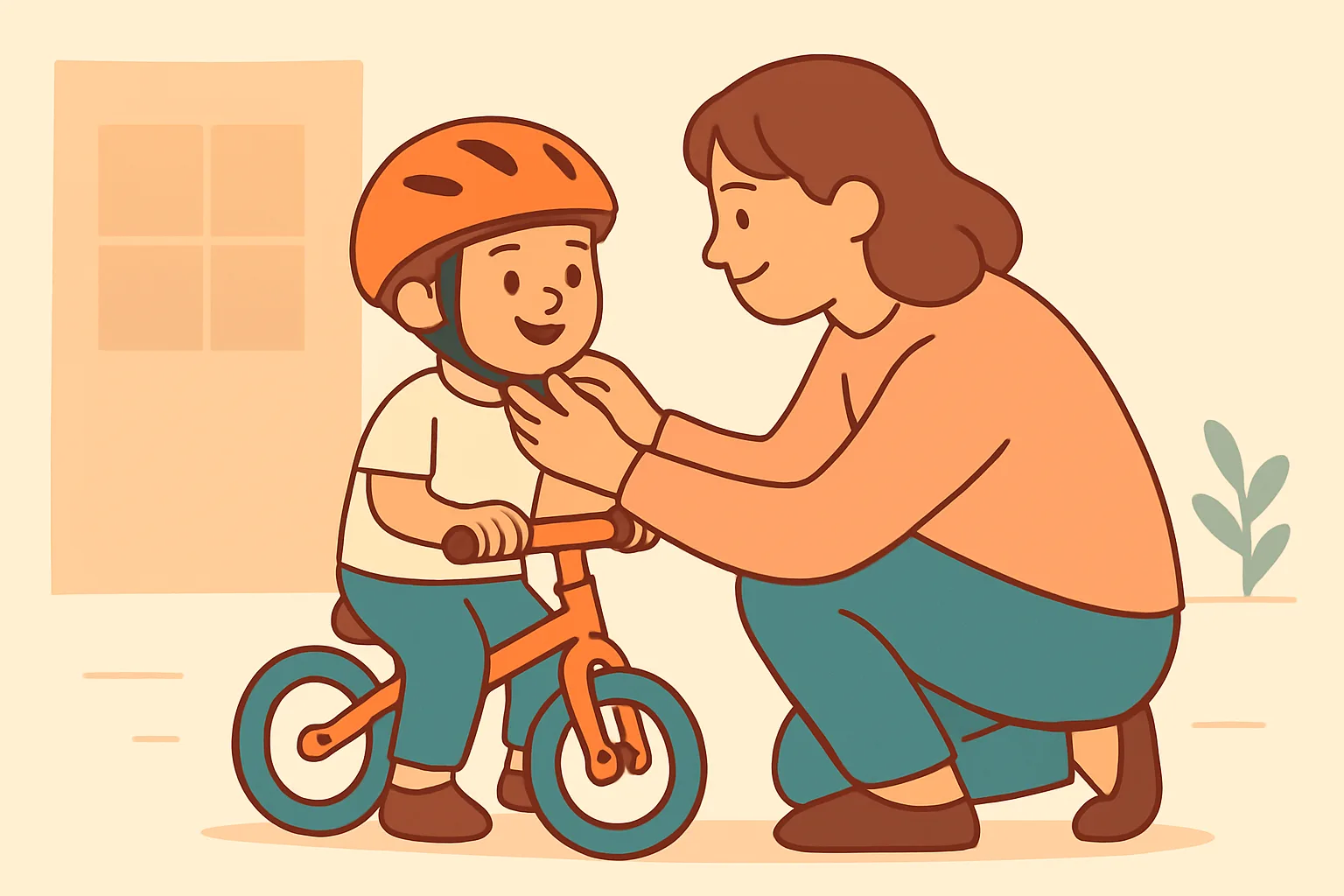
If your 3 year old rips the helmet off every time, it's almost always one of three things: it doesn't fit, it went on at the wrong moment, or they've noticed you don't wear one. Fix those and the helmet mostly stops being a fight. What's left is a rule, and 3 to 5 year olds are good at rules when the rule never changes.
Chapter 5 of the PreSafe workbook, Road Rules, has a character for this. Bump is a helmet, and his line is the one to teach: "Whenever you cruise, whenever you ride, always wear a helmet with pride."
1. Check the fit
A helmet that's too big slides over their eyes. One that's too tight pinches. Either one gets pulled off, and the child is right to pull it.
- It should sit level on the head, two fingers above the eyebrows, not tipped back.
- The side straps should make a V just under each ear.
- The chin strap should be snug enough that one finger fits under it, no more.
- Shake test: with the strap buckled, have them shake their head. The helmet should move with the head, not on it.
Let them pick the helmet if you can. A child who chose the orange one wears the orange one.
2. Fix the timing
The helmet goes on before the bike comes out, not after they're already on it and excited to go. The order is: shoes, helmet, click, then the bike. Same every time, like the seat belt. The workbook puts Click the Seat Belt and Bump the Helmet on facing pages for that reason: same rule, same click, one for the car and one for the bike.
If the helmet isn't on, the bike doesn't move. Say it calmly once and mean it. Most kids test it twice and then stop.
3. Wear yours
This one is uncomfortable. A 4 year old who sees you ride without a helmet has learned that helmets are for little kids, and they don't want to be a little kid. Wear one on every ride, including the one around the block. It's the single most effective thing on this list.
4. Make it a rule, not a request
"Please put your helmet on" invites a negotiation. "We always wear helmets" doesn't. The rule covers bikes, scooters, balance bikes, trikes and anything else with wheels. The rhyme says "whenever you cruise, whenever you ride" on purpose.
5. Give them something to be proud of
The rhyme ends "with pride" and that's not decoration. The workbook has a page where the child cuts out Bump's pieces and glues him back together, and a coloring page that says "A helmet makes your head safe and happy." A child who has built the helmet character and colored it thinks of the helmet as theirs. Stickers on the real helmet do the same job.
What to say when they ask why
Keep it short and about them. "Your head is soft on the inside and the helmet is hard on the outside. If you fall, the helmet gets the bump instead of you." That's why the character is called Bump. You don't need statistics and a 3 year old won't hear them anyway.
One tip: put the helmet on the handlebars when you put the bike away. Next time, it's the first thing they see, and the order takes care of itself.
What to do next
Chapter 5 of the PreSafe workbook has the Bump and Click pages, the car seat matching page and the road sign coloring pages to print. The road rhyme and the short chapter video are free in the Learning Center.
Questions parents ask
- At what age should a child start wearing a bike helmet?
- The first time they're on anything with wheels, including a balance bike or a seat on the back of yours. Starting at 2 or 3 means there's never a "before helmets" they remember.
- My child says it's too hot or itchy. Now what?
- Check the fit first, because a bad fit feels hot and itchy. Then a thin cotton cap under it in summer, and a helmet with more vents next time.
- What about scooters and trikes?
- Same rule. Falls off a scooter are as hard on the head as falls off a bike, and the habit only works if it's every time.
Explore the PreSafe Early-Age Safety Workbook
7 essential safety chapters, fun activities, catchy rhymes, and lifetime access to all video lessons. Everything you need to keep your little one safe.
You Might Also Enjoy
Teaching Kids to Cross the Street Safely: Stop, Look, Listen
A 3 to 5 year old can't judge how fast a car is coming, so the routine has to do the judging for them. Here is how to teach stop, look left, look right, listen, and make it automatic.
A Room-by-Room Home Hazard Hunt for Kids Ages 3 to 5
A hazard hunt is a walk through your own house where your child does the finding. Here is what to look for in each room, and the questions that get a 3 to 5 year old thinking instead of just nodding.