A Room-by-Room Home Hazard Hunt for Kids Ages 3 to 5
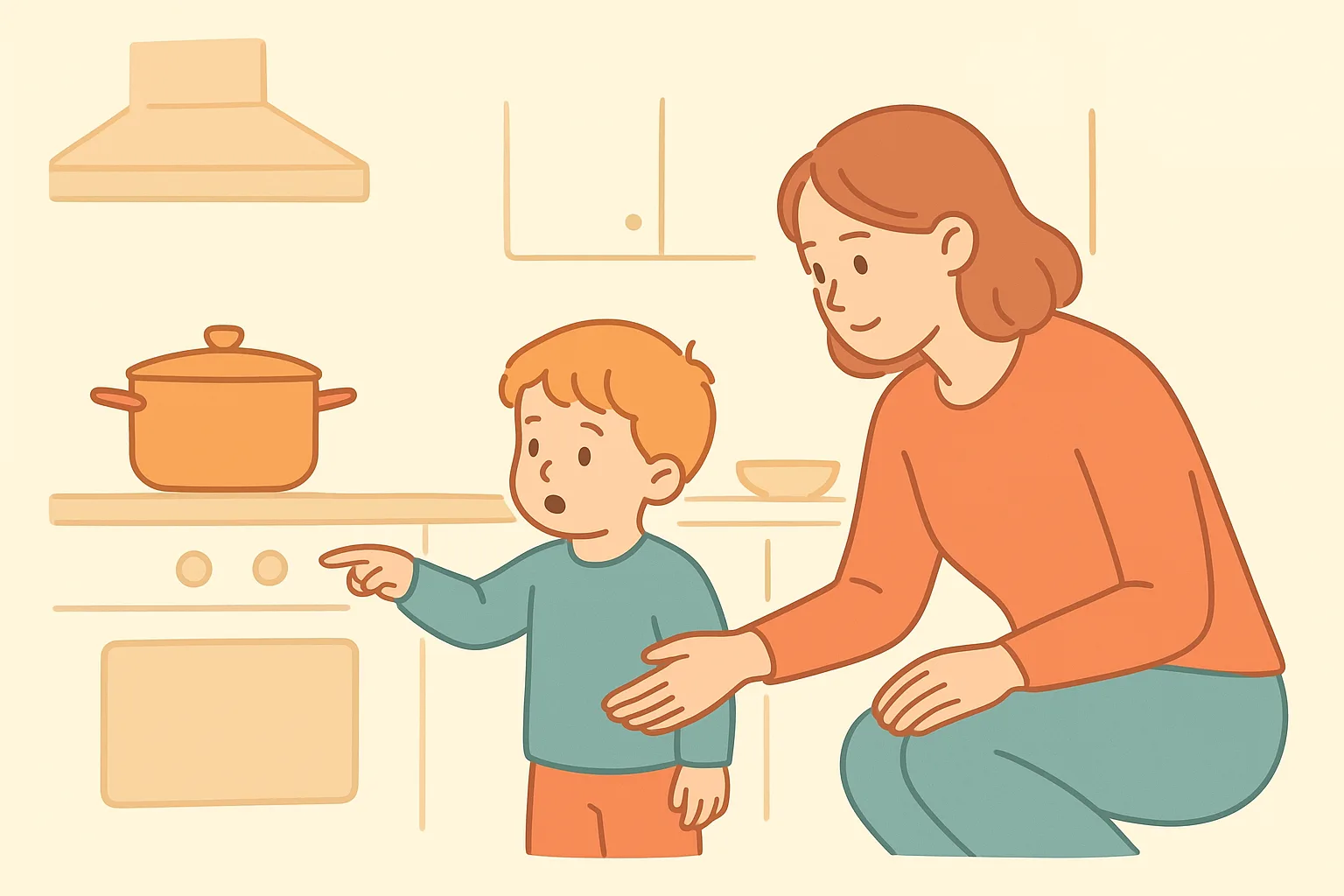
The fastest way to teach a 3 to 5 year old home safety is to stop telling them what's dangerous and start asking them. A hazard hunt is exactly that: you walk the house together, room by room, and they do the finding. You ask "Is this safe?" and "What could happen if we touch that?" and let them answer.
Chapter 2 of the PreSafe workbook, Home Safety, works this way. It has a page with a safe kitchen and an unsafe one, and the child circles the nine things wrong in the unsafe kitchen. Doing it on paper first helps. Doing it in your real kitchen is what makes it stick, because those are the drawers and cords they'll see every day.
How to run the hunt
Keep it to one or two rooms a day. Bring the safety labels from Chapter 1 if you have them, or a sheet of red dot stickers. When your child finds a hazard, they mark it. Ask the two questions every time, and accept short answers. "Hot" is an answer. "Ouch" is an answer.
Here's what to look for.
Kitchen
The room with the most hazards in any house.
- Pot handles turned out over the edge of the stove
- The stove and oven door themselves, on or off ("Hot, Burn")
- Knives on the counter or in a drawer at their height ("Sharp, Cut")
- Cords hanging from the kettle, toaster or coffee maker
- Cleaners under the sink ("Lick, Sick")
- The dishwasher when it's open, with knives pointing up
- Plastic bags
Ask: "Which things are hot? Which things are sharp? Which cabinet is a 'no' cabinet?"
Bathroom
- Medicine and vitamins, even the ones that look like candy
- Razors
- The bathtub (see the water rules)
- Hair dryer near the sink ("Water, Shock")
- Cleaners and bleach
Ask: "Is that candy? How do we know?" Then show them the medicine cabinet is a "Never Touch" place.
Living room
- Cords and blind cords
- Outlets without covers ("Electricity, Shock")
- Furniture that could tip: bookshelves, dressers, a TV on a stand
- Small things on low tables that fit in a mouth
- Candles and lighters
- Anything they'd climb on. "If I climb and I fall, I won't like that at all."
Ask: "What happens if you climb that?"
Bedroom
- Blind cords by the bed
- A window they can reach
- Toys with small parts if there's a younger sibling
- The dresser, again
Garage and yard
The chapter has a front yard scene for a reason. Outside is where the hazards are less obvious.
- Tools, especially anything with a blade
- Gas cans, paint, pool chemicals
- The car, and never playing in or behind it
- Ladders
- Pools, buckets and anything holding water
- The street. The driveway counts as the street.
Ask: "Where does the yard stop and the road start?" and mark it.
The front door
The workbook adds one hazard most lists forget: the door. Two rules, two labels. "Always Lock" on the door. "Never Talk" for anyone who knocks when a parent isn't there. The stranger rhyme lives in this same chapter: "If to me a stranger talks, I turn around, away I walk."
One tip: end the hunt with a "safety report card" for the house, an idea straight from the workbook's parent page. Count the hazards found, count the ones you fixed together (outlet cover on, cord tied up), and stick the card on the fridge. Kids love a score.
What to do next
Chapter 2 of the PreSafe workbook has the safe-and-unsafe kitchen page, the door rules, the stranger rhyme and the emergency number pages to print. The rhymes and short chapter video are free in the Learning Center.
Questions parents ask
- How long should a hazard hunt take?
- Ten minutes a room. Attention runs out fast at 3 to 5. Two rooms a day, and repeat the whole house a month later.
- Should I fix hazards during the hunt or after?
- During, when it's quick. A child who watches you put an outlet cover on the outlet they found learns that finding a hazard leads to fixing it.
- My child just says "no" to everything. Is that working?
- Partly. Ask the second question, "what could happen?", and wait. Even "ouch" shows they connected the object to the harm, which is the point.
Explore the PreSafe Early-Age Safety Workbook
7 essential safety chapters, fun activities, catchy rhymes, and lifetime access to all video lessons. Everything you need to keep your little one safe.
You Might Also Enjoy
12 Safety Activities for Preschoolers You Can Do at Home This Week
Twelve short, hands-on safety activities for kids ages 3 to 5, one for every part of the PreSafe workbook. Each takes about ten minutes and uses things you already have.
How to Get a 3 Year Old to Wear a Bike Helmet (and Keep It On)
Most helmet fights with a 3 to 5 year old are about fit, timing or the fact that nobody else is wearing one. Fix those three and the helmet stops being a fight. Here is how, plus the rhyme that helps.