Teaching Kids to Cross the Street Safely: Stop, Look, Listen
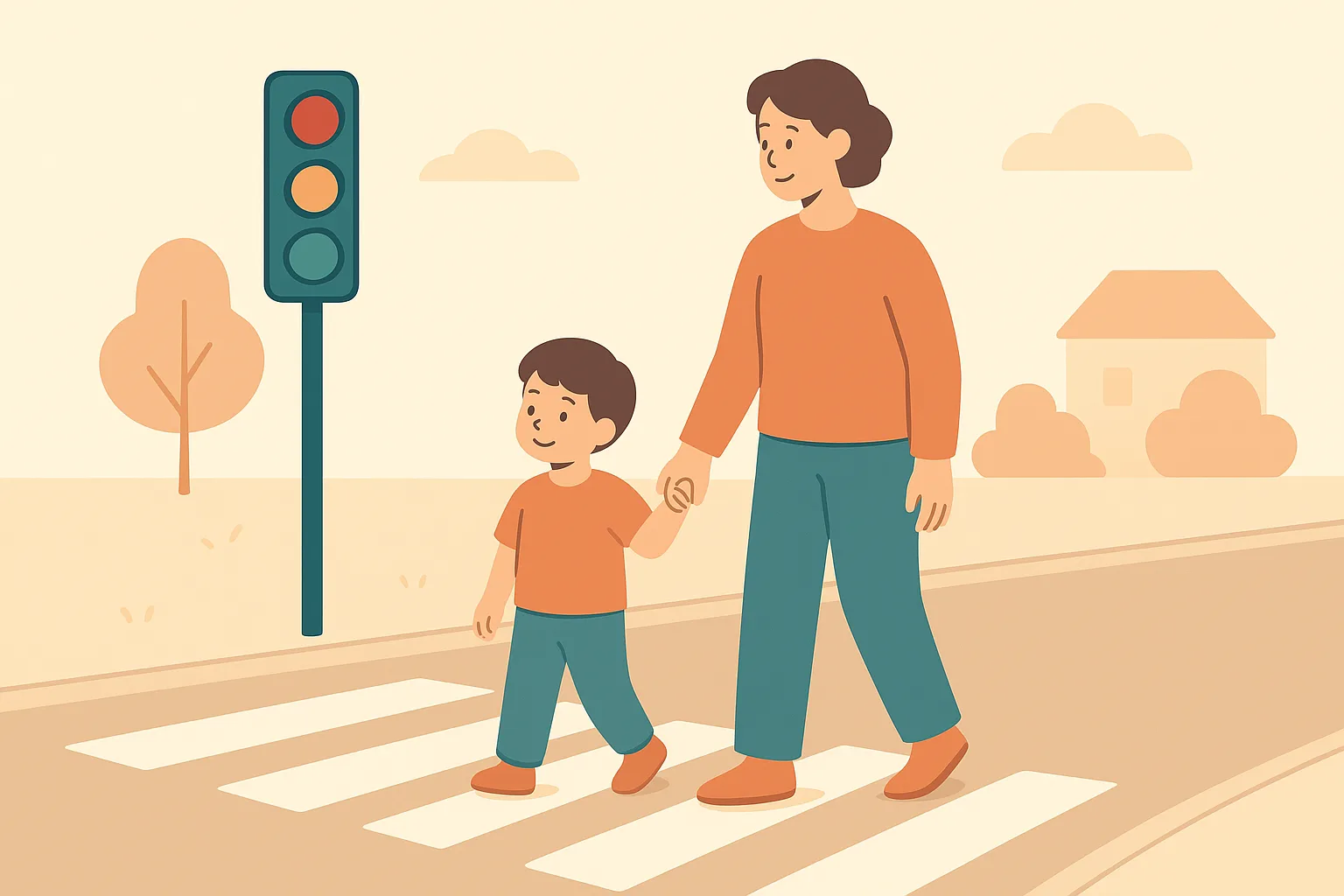
A child of 3 to 5 cannot tell how fast a car is coming or how far away it is. Their eyes and their judgment aren't there yet. So teaching a preschooler to cross the street means giving them a routine so fixed that they do it every time, holding your hand, until they're old enough to cross alone. Judging traffic comes much later. That's years away. The habit starts now.
Chapter 5 of the PreSafe workbook, Road Rules, teaches the routine in four words: stop, look, listen, and the rhyme "Look both ways and never race, safety first in every place."
The routine
Every crossing, every time, out loud:
- Stop at the curb. Toes at the edge, not over it.
- Look left. Say it.
- Look right. Say it.
- Look left again. The near lane is the one that gets you first.
- Listen. Is anything coming that you can't see?
- Walk, don't run. Keep looking as you cross.
Say the words every single time, including the driveway and the parking lot. If you skip it when it's quiet, they learn that it's sometimes optional. It isn't.
Where to practice
Start on the quietest street you have, or a parking lot at closing time. Hold hands. Do the routine three or four times in a row. Then do it on the way to the park, the way to preschool, the way to the car.
The workbook has a tracing page where the child writes the words LEFT, RIGHT and STOP. A child who has written the word can say the word, and a child who can say it can lead the routine while you hold their hand. Let them lead. They love being the one who says "stop."
Traffic lights and signs
A 4 year old can learn what the colors mean, and it helps them feel like they understand the street. Red means stop. Green means go. Yellow means the light is about to change, so stop if you can.
The walk signal is the one to teach carefully. Explain that the little walking person means it's our turn, and the red hand means wait. Then explain that even on the walking person, we still do the routine, because a car can turn.
The workbook has coloring pages for the traffic light and the common signs, and a page that asks the child to name the signs near their own home. Do that one on a walk: point at the stop sign on your corner and ask what it says.
Holding hands is the rule
Until you decide otherwise, your child holds a hand or a stroller in any street or parking lot. Make it a rule with no exceptions rather than a request. Kids at this age do better with "we always" than "please."
What not to bother with yet
Seat belt and car seat rules are in this same chapter, and the workbook's character Click the Seat Belt covers them. Those are worth teaching. What isn't worth teaching yet is judging gaps in traffic, reading a driver's intent, or crossing mid-block. Those come at 8 or 9 and later. At 3 to 5, the rule is the routine, at the corner, holding your hand.
One tip: at a red light in the car, ask "What does that light mean?" It turns every drive into a two-second practice.
What to do next
Chapter 5 of the PreSafe workbook has the left-right-stop tracing page, the traffic light and sign coloring pages, and the Click and Bump characters for seat belts and helmets. The road rhyme and the short chapter video are free in the Learning Center.
Questions parents ask
- At what age can a child cross the street alone?
- Not at 3 to 5. It is years away and depends on the street. What you are building now is the habit they will use then.
- My child looks but doesn't really see. Is that normal?
- Yes. The looking is the habit. The seeing comes later. Keep the routine and keep holding hands.
- Should I teach "look left, right, left" or just "look both ways"?
- Left, right, left. The extra left is the near lane. Three looks are as easy to learn as two.
Explore the PreSafe Early-Age Safety Workbook
7 essential safety chapters, fun activities, catchy rhymes, and lifetime access to all video lessons. Everything you need to keep your little one safe.
You Might Also Enjoy
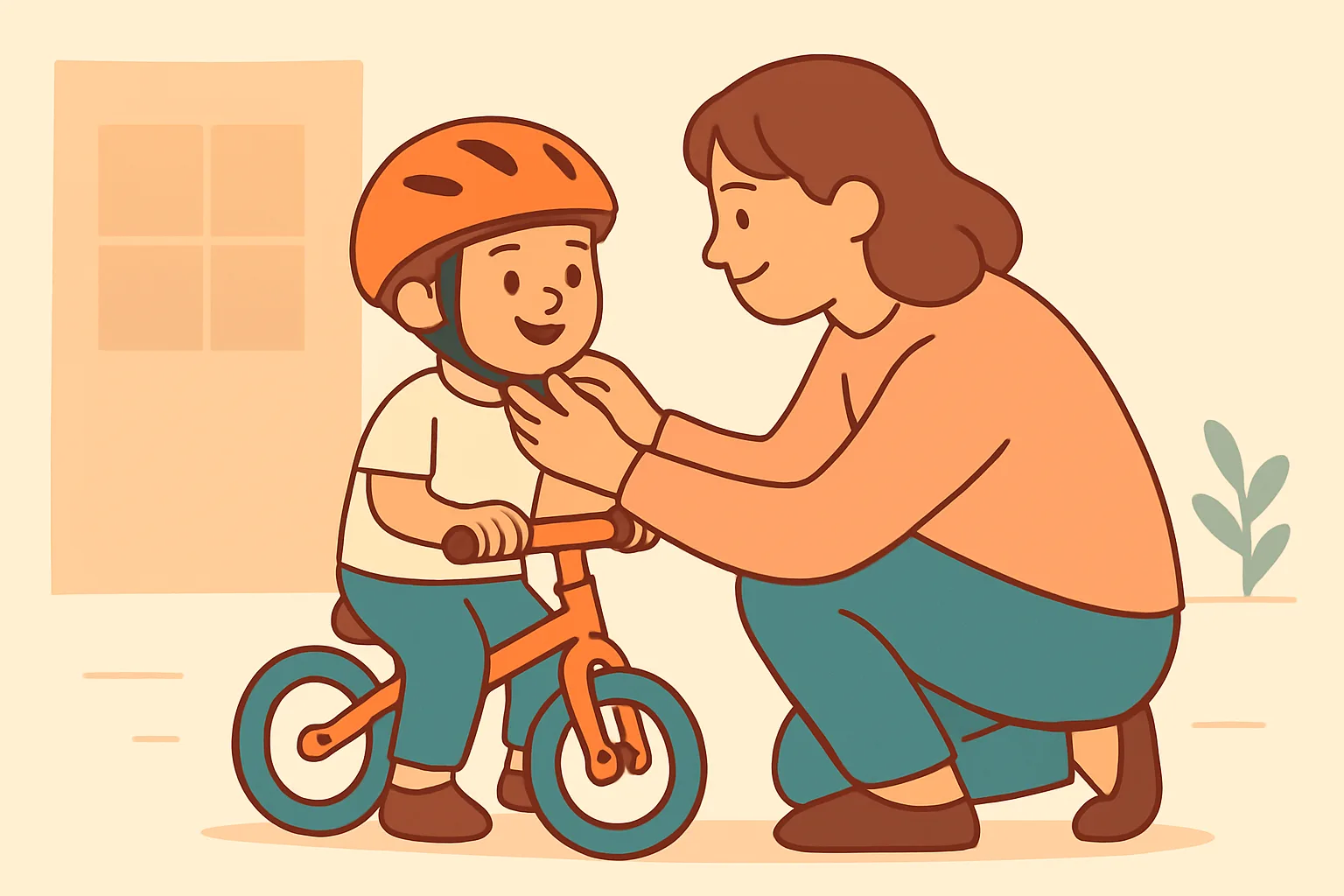
How to Get a 3 Year Old to Wear a Bike Helmet (and Keep It On)
Most helmet fights with a 3 to 5 year old are about fit, timing or the fact that nobody else is wearing one. Fix those three and the helmet stops being a fight. Here is how, plus the rhyme that helps.
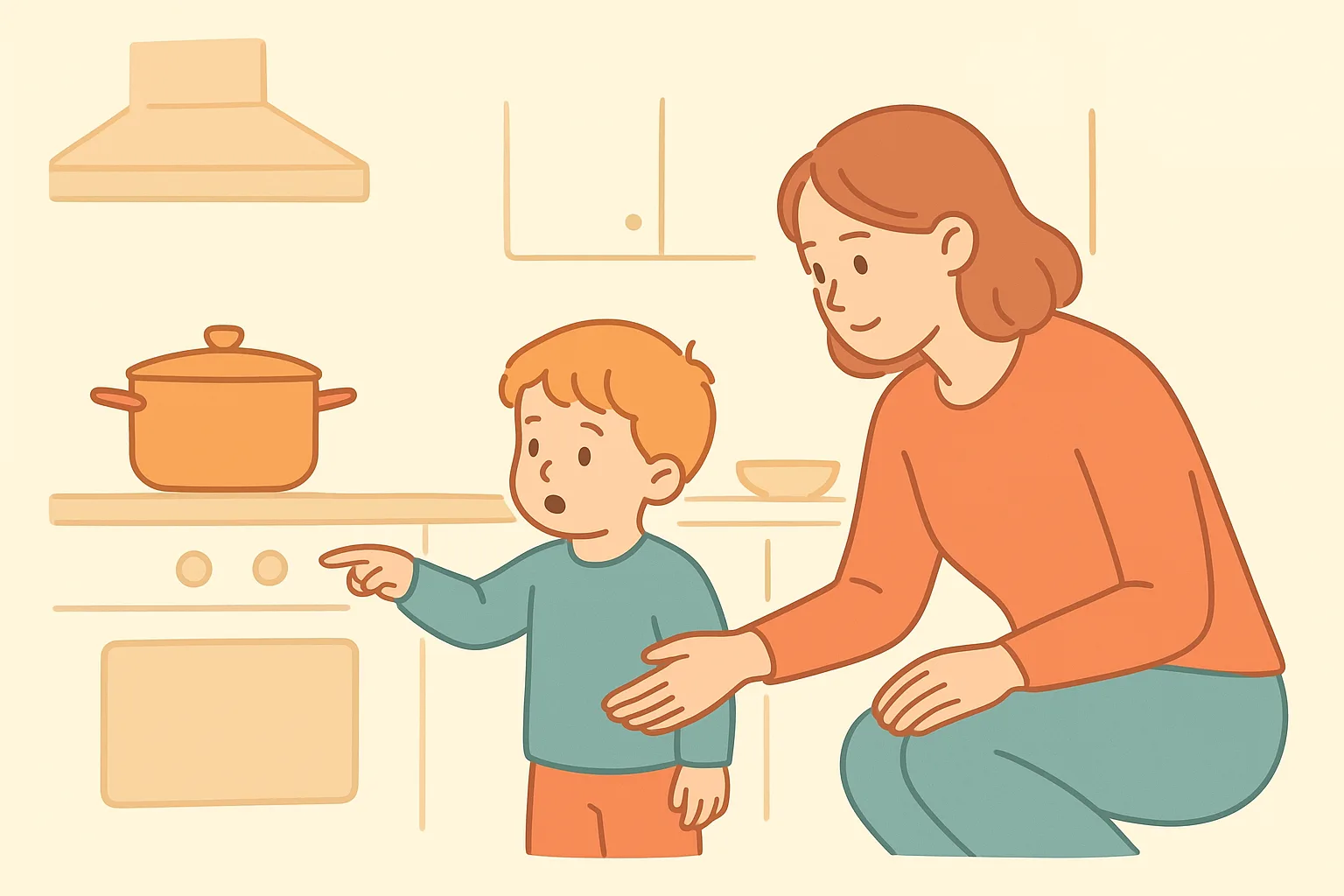
A Room-by-Room Home Hazard Hunt for Kids Ages 3 to 5
A hazard hunt is a walk through your own house where your child does the finding. Here is what to look for in each room, and the questions that get a 3 to 5 year old thinking instead of just nodding.