How to Teach Your Child Their Full Name and Your Phone Number
When a lost child finds a helper, the helper asks two things: "What's your name?" and "How can I reach your mom or dad?" A 4 year old who can answer both is usually back with you in minutes. One who can only say "Tommy" and "Mommy" is not, because the store has four Tommys and every woman in it is somebody's mommy.
So this is worth a few weeks of practice. Chapter 6 of the PreSafe workbook, Lost? Look, has the child fill in "My name is, my parents' names are, their phone number is" on every page, because saying it out loud to a stranger is the whole point of the chapter.
Here's how to teach it.
Their full name first
Most 3 year olds know their first name and not their last. Start there. Use their full name in ordinary moments: at the door, at bedtime, when you're proud of them. "Good job, Tommy Reyes." They'll start saying it back.
Then ask the question the way a helper would: "What's your name?" and wait for both parts. When they give you both, you're done with step one.
Your name, not "Mommy"
This is the one parents skip. Your child has to know your first and last name, because "Mommy" doesn't help anyone page you over a loudspeaker.
Tell them: "My name is Judy Reyes. When someone asks who your mom is, you say Judy Reyes." Practice it as a question and answer. The workbook has a page that asks "What is your Mom's name? What is your Dad's name?" right next to "My name is." Fill it in together.
The phone number, three digits at a time
Ten digits is a lot for a 4 year old. Don't try it all at once.
- Week one: the first three. Say them in a rhythm, like a rhyme, and clap on each.
- Week two: the next three, added on.
- Week three: the last four.
- Week four: the whole thing, in the same rhythm, every day.
Say it at the same time each day so it becomes part of the routine. In the car. At breakfast. Kids at this age learn a number the way they learn a rhyme, by hearing it the same way many times.
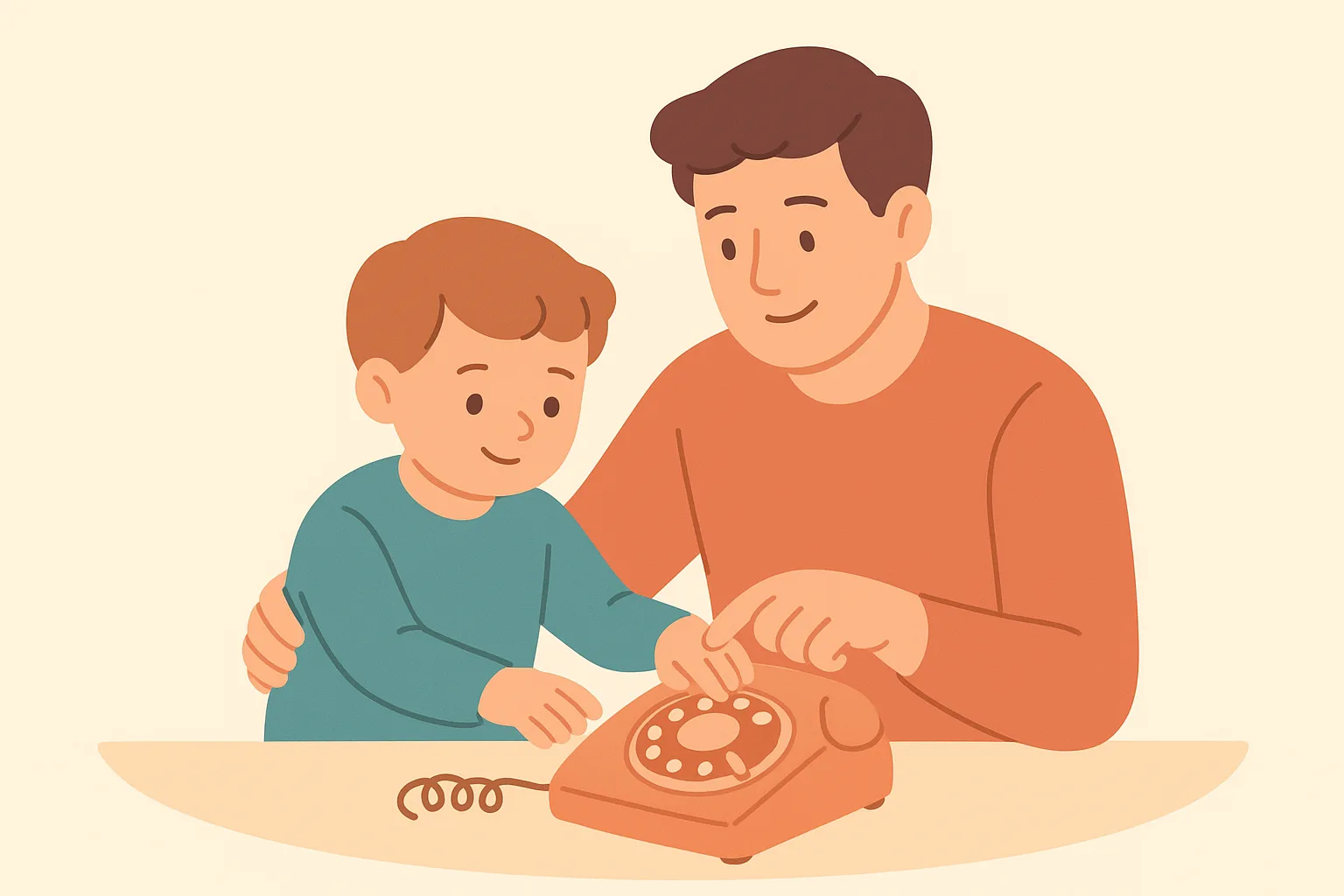
Once they can say it, test it the hard way: hand them your phone with the keypad open and ask them to dial it. The digits they know in their head and the buttons they press are two different skills.
Put it on a card until they have it
While they're learning, write their name, your name and your number on a card and put it in their pocket or shoe when you go somewhere crowded. Tell them it's there. A child who knows the card exists will hand it to a helper.
The workbook's Lost? Look pages run through this exact conversation: "Are you lost?" "Yes. My name is. My parents' names are. Their phone number is." Practice it as a script, with you playing the helper.
Who to say it to
Knowing the number is half of it. The other half is choosing the right person to tell. Chapter 6 teaches the child to stop, stay put, and look for a safe helper: a mom with a stroller, a family with kids, a person in a uniform like a lifeguard or a store worker. The workbook has three scenes, a street, a park and a beach, where the child circles the safe people and traces a path to them.
One tip: test it somewhere real. At the grocery store, ask "If you couldn't see me right now, what would you say?" and let them run the whole script. Their name, your name, your number. Then say "good, and who would you say it to?"
What to do next
Chapter 6 of the PreSafe workbook has the name and number fill-in pages, the "Are you lost?" script and the safe-helper scenes to print. The Lost? Look rhyme and the short chapter video are free in the Learning Center.
Questions parents ask
- At what age should a child know their phone number?
- By 4 or 5, most can say it if you teach it a few digits at a time. Start at 3 with their full name and yours, and add the number when they have those.
- Which number should I teach, mine or my partner's?
- One number. Pick the phone that's always on and always with someone. Add the second number later, once the first is solid.
- Should they know their address too?
- Yes, but after the phone number. The street name is enough at this age. Save the whole address for when the number is automatic.
Explore the PreSafe Early-Age Safety Workbook
7 essential safety chapters, fun activities, catchy rhymes, and lifetime access to all video lessons. Everything you need to keep your little one safe.
You Might Also Enjoy
How to Get a 3 Year Old to Wear a Bike Helmet (and Keep It On)
Most helmet fights with a 3 to 5 year old are about fit, timing or the fact that nobody else is wearing one. Fix those three and the helmet stops being a fight. Here is how, plus the rhyme that helps.
A Room-by-Room Home Hazard Hunt for Kids Ages 3 to 5
A hazard hunt is a walk through your own house where your child does the finding. Here is what to look for in each room, and the questions that get a 3 to 5 year old thinking instead of just nodding.