12 Safety Activities for Preschoolers You Can Do at Home This Week
A child of 3 to 5 learns safety the same way they learn everything else: by doing it, with you, more than once. A talk about hot stoves lasts thirty seconds. A game where they hunt for the hot things in the kitchen and stick a "Hot, Burn" label on each one lasts a week, because they keep checking the labels.
Here are twelve activities that work at this age. Each one takes about ten minutes. Most use paper, crayons and things already in your house. They follow the seven chapters of the PreSafe workbook, so if you have it, the pages are ready. If you don't, you can still do every one of these tonight.
Saying no to unsafe things
1. The safety label hunt. Cut out small paper signs that say "Hot, Burn", "Sharp, Cut", "Never Touch" and "Lick, Sick". Walk through the house together and let your child decide where each one goes. The stove, the knife drawer, the outlet, the cabinet under the sink. Let them stick the label on. They chose it, so they remember it.
2. Stay Away, Do Not Play. Lay out some safe and some unsafe objects on the table: a toy car, a spoon, a lighter (empty), a bottle of cleaner, a ball. Ask "Can we play with this one?" for each. When the answer is no, you both say the rhyme: "No means that I stay away. No means that I do not play." Chapter 1 of the workbook uses this game on every page.
Home safety
3. Find the nine hazards. Draw a quick kitchen, or use the workbook page, with things wrong in it: a pot handle sticking out, a cord hanging down, a knife on the edge of the counter. Have your child circle each one and say why it's wrong.
4. Practice the stranger rhyme. "If to me a stranger talks, I turn around, away I walk." Say it, then act it out. You play the stranger at the door, they turn and walk to you. Keep it light. The point is the habit, not the fear.
5. Learn the family names and numbers. Your child should be able to say your first and last name and your phone number. Write them on a card and practice a few digits a day. There's a fill-in page for this in Chapter 2 and the "Lost? Look" chapter uses it again.
Fire safety
6. Test the smoke alarm together. Press the test button and let them hear it. Tell them what it means: when Sniff screams, we go. Once a week is the rule in the workbook, and a child who has heard the sound in daylight is far less likely to freeze at night.
7. Crawl under the smoke. Lie a blanket across two chairs and have them crawl under it to the door. "Crawl down low, under the smoke I go." Then walk the real route out of their bedroom to your family meeting spot outside. Do it twice.
8. Stop, drop and roll. On the carpet, on the grass. Three moves, said out loud each time. Most 3 year olds think it's the best game in the book.
Water safety
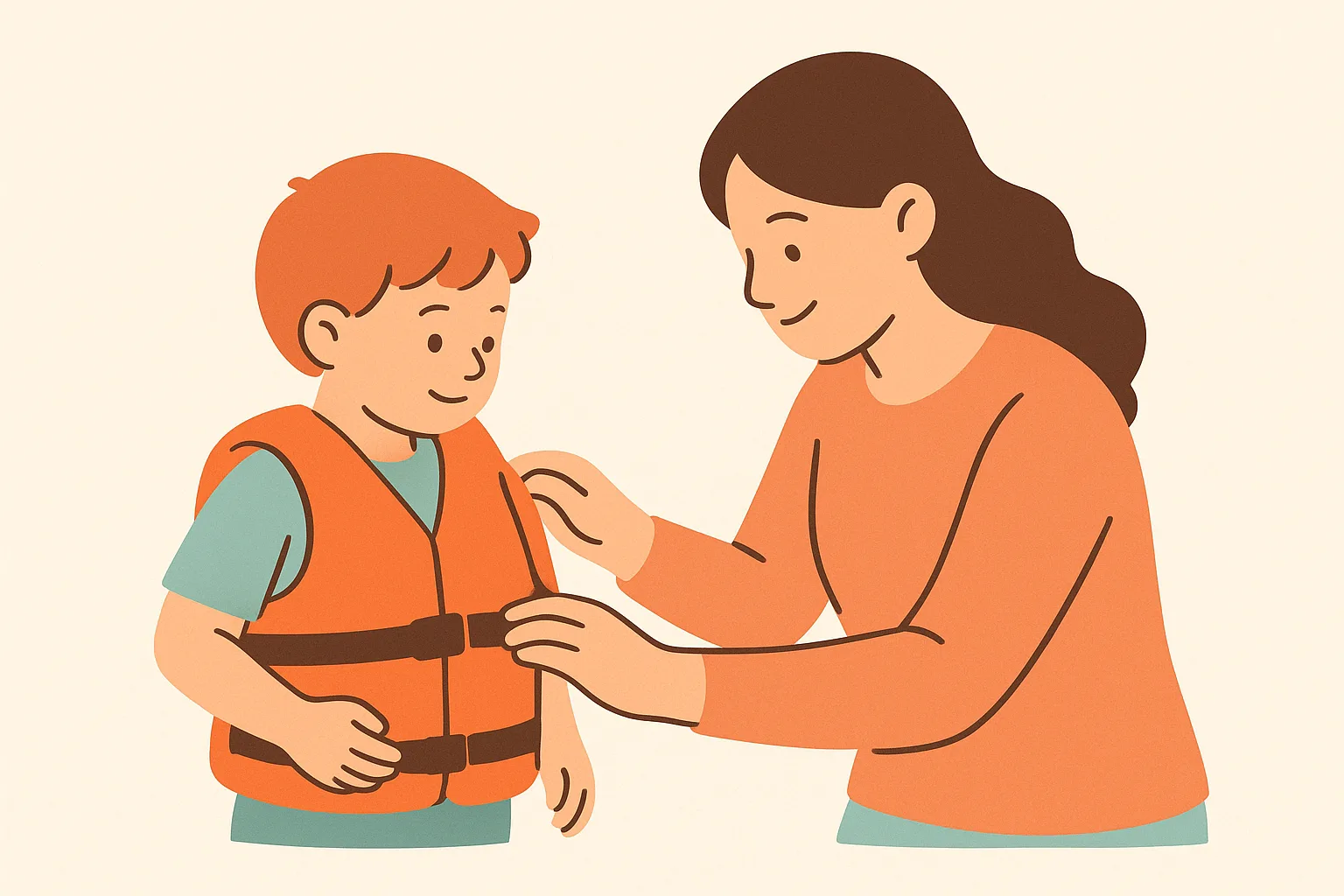
9. The life jacket fit check. Put their life jacket on, buckle it, then lift gently at the shoulders. If it slides up past their chin, it's too big. Float's line: "Sink under water, you will cry. Float will keep your head up high."
10. Never reach for toys in water. Float a toy just out of reach in the bath or a bucket. Ask what to do. The answer is "get a grown-up", not "lean out". This one comes up on three separate pages of Chapter 4 because it's how a lot of falls happen.
Road rules
11. Stop, look left, look right, listen. Practice at the curb on a quiet street, holding hands. Say the steps every single time you cross, even the driveway. The workbook has a tracing page for the words LEFT, RIGHT and STOP.
12. The friendly click. Before the car moves, your child buckles their own seat belt, or says "click" when you do it. "Make sure that your seat belt makes a friendly click." Same for the bike helmet: on before the bike moves, every time.
One tip: pick one activity a day for a week, then one a week after that. Repetition with a calm parent is what makes it stick. A single long safety talk does not.
What to do next
If you want the pages already drawn, the PreSafe workbook has every one of these as a printable activity, plus the rhymes and the characters that go with them. If you'd rather start free, the Learning Center has the safety rhymes and the short videos for each chapter.
Questions parents ask
- What age can a child start learning safety rules?
- Around 3. At that age they can follow a two-step instruction, remember a short rhyme, and tell the difference between "yes" and "no" objects when you show them. Keep each activity under ten minutes.
- How often should we practice?
- Once a day for the first week, then once a week. Short and often beats long and rare. Most families pick a "safety day" and keep it.
- Do I need the workbook for these?
- No. Paper and crayons cover most of them. The workbook saves you drawing the pages and adds the characters and rhymes, which is what most kids remember.
Explore the PreSafe Early-Age Safety Workbook
7 essential safety chapters, fun activities, catchy rhymes, and lifetime access to all video lessons. Everything you need to keep your little one safe.
You Might Also Enjoy
A Room-by-Room Home Hazard Hunt for Kids Ages 3 to 5
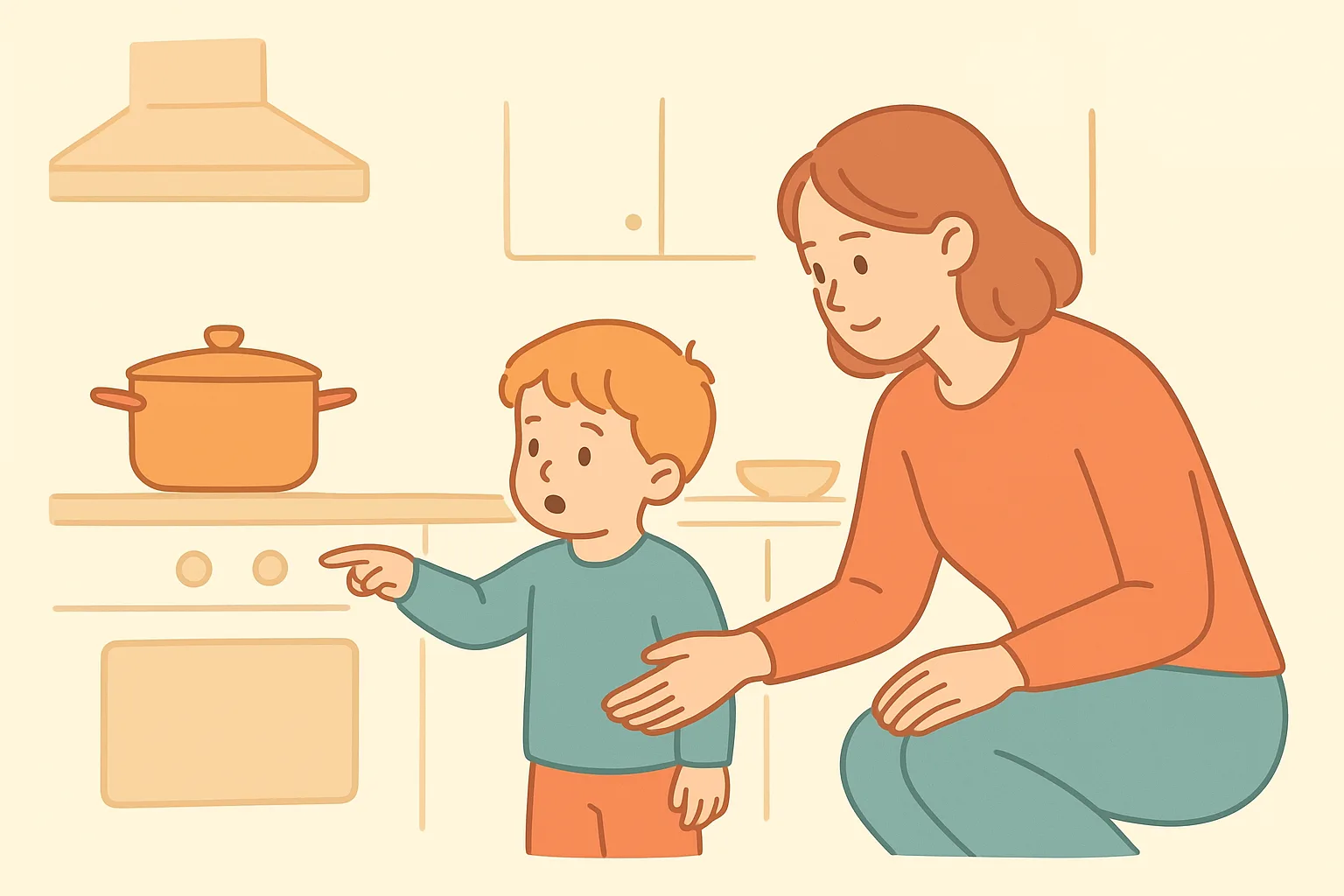
A hazard hunt is a walk through your own house where your child does the finding. Here is what to look for in each room, and the questions that get a 3 to 5 year old thinking instead of just nodding.
How to Get a 3 Year Old to Wear a Bike Helmet (and Keep It On)
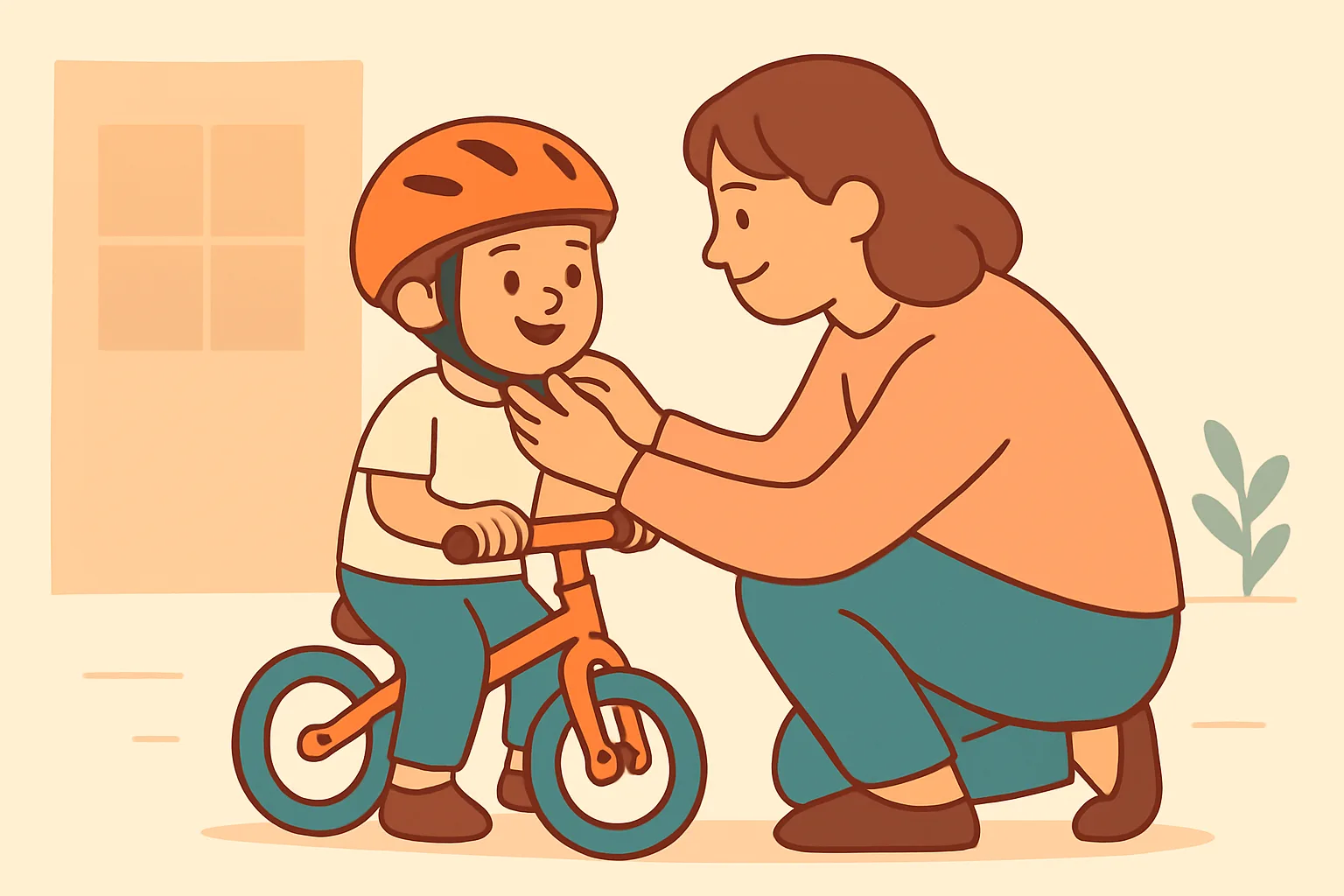
Most helmet fights with a 3 to 5 year old are about fit, timing or the fact that nobody else is wearing one. Fix those three and the helmet stops being a fight. Here is how, plus the rhyme that helps.